
Key Highlights
- This step-by-step guide will help you declutter your home in just one weekend.
- Learn why decluttering is crucial for mental clarity and a clean, organized home.
- Get practical tips to tackle each room effectively using easy, actionable strategies.
- Find out how to prepare with the right tools like trash bags, baskets, and labels for a smoother process.
- Overcome common challenges, stay motivated, and maintain a clutter-free home long-term.
Introduction
Starting your journey to declutter can be life-changing. It is the first step to having a more organized and peaceful life. This beginner’s guide will give you the tips and ideas you need to manage the decluttering process well. So, get ready, grab your cleaning tools, and let’s make your home the calm space you want. Good luck on this freeing adventure!
Understanding the Basics of Decluttering

In today’s world of overconsumption, it’s easy for our homes to become overwhelmed with stuff. Decluttering isn’t just about tidying up; it’s about making intentional decisions to create a space that fosters peace, productivity, and calm.
What is Decluttering?
Decluttering means getting rid of items that no longer serve a purpose in your life. A cluttered home can increase stress, make it hard to focus, and even impact your productivity. On the flip side, a clutter-free space brings clarity, reduces anxiety, and makes day-to-day life easier.
The Psychological Benefits of a Clutter-Free Home
Have you ever seen how a clean and tidy room can quickly boost your mood? A clutter-free home affects us more than just how it looks—it has strong mental benefits. When we clear out our homes, we often feel free and full of energy.
This feeling comes from seeing less visual chaos, which helps our minds relax and reduces stress. A clean home can create peace of mind, improve how well we sleep, and help us focus better. Also, when we let go of material possessions, we lessen the burden of buying too much and may even cut down on debt.
Living simply with fewer possessions lets us focus on experiences, relationships, and our growth instead of just material things. It helps us feel thankful for what we have, leading to a happier and more meaningful life.
Preparing to Declutter: What You Need to Know

Before you start the decluttering process, take some time to gather your tools and make a plan. It’s important to create a good environment and set achievable goals for a better decluttering experience.
Keep in mind that this is not a race; it’s a journey. By preparing well and having a positive attitude, you are getting ready to succeed in reclaiming your space. You can change your home into a peaceful place.
Essential Tools and Supplies for an Effective Decluttering Session
To make your decluttering easier and more organized, it is good to have some important tools and supplies ready. First, have plenty of trash bags to throw away things that are broken, damaged, or no longer useful.
Next, get some laundry baskets, storage bins, or boxes to help you sort items while you clean. Label these containers clearly with words like “donate,” “sell,” “keep,” or “relocate.” This will help you make quicker decisions. A label maker can also help keep your areas organized and easy to see, even though it is not necessary.
Other helpful items to have close by are a notepad and pen for writing lists or ideas. It’s also good to have cleaning supplies to wipe surfaces as you work. And maybe play some upbeat music to keep you feeling energetic and motivated.
Setting Realistic Goals for Your Decluttering Weekend
Decluttering your whole home can feel overwhelming. It’s important to set small, practical goals, especially if you want to do it in one weekend. Start by dividing the task into smaller parts. Instead of trying to clean every room in a single day, concentrate on specific areas or focus on one room each day.
For instance, spend Saturday morning sorting out the kitchen pantry. Then, use the afternoon for the bathroom cabinets. You might try the reverse direction method for your clothes. Hang your clothes with the hangers facing the wrong way. After you wear something, turn the hanger to the correct direction. After a few months, get rid of the clothes you haven’t worn.
Always remember: progress is more important than perfection. Decluttering takes time, so it’s okay to take breaks. To help you get started, make a home checklist that shows what to do. Be nice to yourself. Celebrate all the little wins along the way. You’re making a proper home for yourself, and that’s something to be proud of.
A Beginner’s Step-by-Step Guide to Decluttering
Now that you have the right tools and attitude, let’s simplify the decluttering process into easy steps. Following this clear plan will make your journey more efficient and satisfying. You will change your house into a calm and organized space.
Keep in mind that staying consistent is very important during this journey. If you spend even a little time decluttering regularly, you will keep the progress you have made. This way, you can enjoy the long-term benefits of living without clutter.
Step 1: Creating a Personalized Decluttering Plan
Before you start the decluttering process, it helps to make a personal plan for your living room and the rest of your home. First, find the areas that need the most help. This might be a full kitchen pantry, a messy home office, or a crowded bedroom closet. These are the spaces you will focus on.
After you identify these areas, think about the order you want to clean them. Some people like to start with the easier jobs to get going, while others want to tackle the tough areas first. There is no right or wrong way—pick what works for you and your style of decluttering.
Finally, check your schedule and set aside specific times for decluttering. This could be just 30 minutes a day. You might decide to do one different room every weekend or clear your entire home in one day. If you have a plan for decluttering, you will stay organized and motivated to meet your goals.
Step 2: Sorting Your Items into Categories
Once you have finished the first step of decluttering, it’s time to sort the rest of your things into different groups. This helps you see what you have. You can then decide what to keep, donate, or throw away. Start by putting similar things together like clothes, books, electronics, or kitchen items.
As you sort your belongings, look for duplicates or things that don’t match your current lifestyle. If you have a lot of things you haven’t used in a while, it may be time for them to go to a new home where they will be used. Set up specific areas or boxes for each category—“keep,” “donate,” “sell,” “trash,” and “relocate.” This will make sorting easier and help you make good choices. Be honest about what you really need and use. Making a checklist for small items might also be helpful. Letting go of unwanted items can feel freeing and create space for things that truly matter.
Step 3: Tackling One Room at a Time
When you want to declutter your home, it’s better to focus on one room at a time. Jumping between different areas can be confusing. Concentrating on a part of your home helps you do a better job and keeps you from feeling overwhelmed.
Start by picking a room—maybe the bedroom, bathroom, or home office. Find a spot where you can sort through things and make choices. Go through the room step by step, starting with one section, drawer, or shelf at a time. For each single item, ask yourself if you really need it, if you use it often, and if it makes you happy.
This process can take time. However, it is important to think about what you value and what should stay in your newly organized home. Remember, each item you take away brings you closer to a calm and useful space. This way makes decluttering feel less hard. You can also enjoy small wins as you change your home, one room at a time.
Step 4: Deciding What to Keep, Donate, or Discard
As you reach step 4, it’s important to choose what to keep, donate, or throw away. Think about how useful or valuable each item is. Ask yourself whether it helps your daily life or just makes your space messy. Experts suggest taking time to think about each item carefully to make good choices. Keep in mind that decluttering isn’t just throwing things out; it’s about making your home feel better. Use this chance to create a space that matches your lifestyle and gives you a sense of calm.
Step 5: Organizing and Storing Kept Items Efficiently
Once you have cleared out and sorted your things, it’s time to organize and store the items you want to keep. Good storage can help you maintain a clean and functional home. It makes it easy to find what you need when you need it. Use clear bins, baskets, and drawer dividers to group similar items together.
Use vertical space wisely. Think about adding shelves, hooks, or organizers that go over doors to get more storage in closets, pantries, and other places. Label everything clearly so you can find things easily and keep things in order. You can also buy small containers, drawer organizers, or shelf risers. These can help you create specific places for items you use often, so you can access them quickly.
Remember, organizing is not something you do just once. It’s an ongoing process. Make sure to tidy up regularly and put items back in their storage spots after you use them. By using smart storage solutions and staying organized, you’ll enjoy the long-lasting benefits of a neat and peaceful home.
Room-by-Room Decluttering Strategies
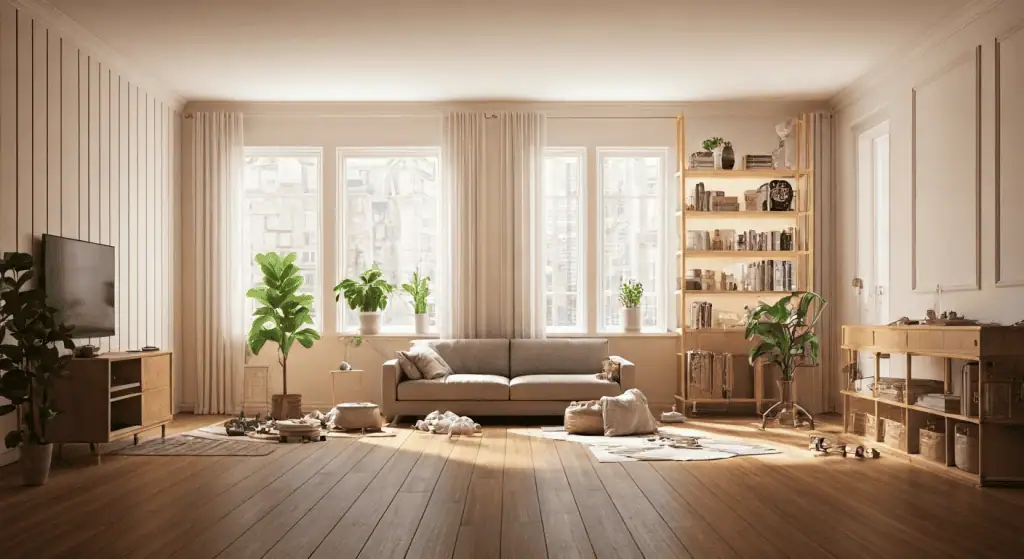
Each room in your home has its own decluttering struggles. Let’s look at some tips for different rooms to deal with common spots of clutter easily. By focusing on each area, you can work better and see great results.
These suggestions are just a starting point. You can change them to fit what you need and like. Also, be creative with your ways to declutter.
Tips for Decluttering the Kitchen and Pantry
The kitchen is often seen as the heart of the home. However, it can get messy quickly. Start by cleaning off your countertops. Throw away any old food from your refrigerator and pantry. Organize your drawers and cabinets too. Check your cooking utensils, bakeware, and cookware. You can donate or throw away duplicates or items you don’t use much.
Create a system to store spices, dry goods, and snacks in your pantry. Use clear bins or containers to keep things easy to see and reach. You can also hang measuring cups, pot lids, and common utensils inside your cabinet doors. Don’t forget to clean out your refrigerator often. Make sure to throw away old condiments and leftovers.
If your kitchen cabinets are too full, think about using shelf risers. They can help you use the vertical space better and store pantry items more effectively. These tips will help keep your kitchen clean and looking good, while also making it more functional.
Simplifying Your Living Space for Better Relaxation
The living room should feel relaxing and be a nice place to gather with friends and family. To achieve this, start by decluttering the area. Remove items that are not needed from coffee tables, end tables, and bookshelves. Keep your remote controls in a specific container or drawer. You can also tidy up your entertainment center by getting rid of DVDs, CDs, or video games that you don’t use anymore.
Look through your books and magazines too. Donate the ones you have already read or don’t care for anymore. Think about adding storage ottomans or baskets. These can hold blankets, pillows, or toys to keep everything neat. Adding soft textures and calming colors, along with simple decorations, can make your living room feel peaceful.
When you focus on a minimalistic style and functionality, your living room can become a place that invites relaxation. This helps create a cozy atmosphere where you can feel good.
Transforming Your Bedroom into a Serene Retreat
Create a peaceful space for sleeping well. Start by keeping your bedroom clean, organized, and welcoming. Make your bed every morning. This small act helps set a good start for the day and makes your room feel tidier.
Clear nightstands, dressers, and other flat areas. Store away books, gadgets, and personal items that do not help you feel relaxed. Organize your closet. Put away clothes that you won’t wear for the season. Donate or toss out stuff you do not use anymore. Consider using shelves, drawers, or hanging organizers to save space.
Pick calm colors and use soft lights. Add natural touches like plants or flowers to boost the relaxing feel of your bedroom. With a few easy changes and better cleaning habits, your bedroom can be a true place of peace. It should be a sanctuary where you can relax, let go of stress, and enjoy a refreshing sleep at night.
Maximizing Space in Your Bathroom
Bathrooms are usually small and can get messy fast. To make the most of your space and feel like you’re in a spa, begin by cleaning up your vanity, drawers, and medicine cabinet. Throw away any old toiletries, makeup, and medicine. Use drawer dividers or small containers to keep your bathroom storage well-organized and easy to use.
You can also use vertical space by adding shelves above the toilet or wall organizers for towels, toiletries, or cleaning supplies. A shower caddy or a hanging organizer is great for keeping shower items close by. A tiered stand helps you arrange perfume bottles or things you use often.
Make a special spot for dirty laundry, like a hamper or shelf. By using these space-saving ideas and cleaning up regularly, you can change your bathroom from messy to calm, helping you have clean counters and a better daily routine.
Overcoming Common Decluttering Challenges
Decluttering can change your life, but it isn’t always easy. You might feel attached to items or put things off. These challenges are normal. To deal with them, it’s helpful to have simple strategies. Staying positive and kind to yourself is important too.
Keep in mind that decluttering isn’t just about being perfect. It’s a way to build a better and calmer home that reflects what you value and hope for in life.
How to Deal with Emotional Attachment to Items
One of the biggest challenges in the decluttering process is dealing with emotional attachment. We often feel sentimental about our belongings. They remind us of happy times, loved ones, or old experiences. While it’s good to appreciate these feelings, holding onto every item can slow down our goal of having less clutter.
When you come across items that bring up strong emotions, pause and think about the memories tied to them. Ask if you really need to keep the item to hold onto the memory. Is there a photo or a story that could capture the memory instead? If yes, you might let go of the item but keep the memory alive in a different way. Remember, decluttering does not lessen the importance of our past. It helps us make space for the present and future. Letting go of physical things can be a way to release attachments that don’t help us anymore. This can free up space for new experiences and cherished memories. By making these tough choices, we open up space for growth and change in our lives.
Strategies for Maintaining Motivation Throughout the Weekend
Decluttering your entire home in a weekend can be hard. It can really test your motivation. To keep going and finish this big job, start by setting small daily or hourly goals. Break the big task of cleaning into smaller parts. Focus on one room, a specific area in a room—like your wardrobe or the space under the kitchen sink—or even just one drawer or shelf.
When you finish each small goal, take a moment to recognize your success. You could enjoy a treat, take a break to do something you love, or just look around and enjoy the new order in your space. Keep your main goal in mind. Picture how calming and organized your home will be once you finish decluttering. You could also create a reward system for more motivation.
You can ask a friend or family member for help. You could also play some lively music to keep your energy up. Focus on one task at a time. This will help you feel less overwhelmed. By using these tips, you will keep your goals in mind, avoid procrastination, and create a happier and more organized living environment that gives you peace of mind.
Maintaining a Clutter-Free Home After the Big Declutter
Congratulations on cleaning up your home! This journey is not over. To enjoy the benefits of your hard work and stop clutter from coming back, you need to create habits that keep things tidy and cut down on future mess. Follow the “one in, one out” rule. This means that for every new item you add to your home, you remove an old one.
By thinking carefully about what you let into your home and setting up routines that help you stay clutter-free, you can keep enjoying the positive changes of a neat space.
Daily Habits to Prevent Clutter from Accumulating
Incorporating some simple habits into your daily routine can help keep your home tidy. Spending a few minutes each day to tidy up can stop clutter from building up.
Make it a habit to put things away right after you use them. Try not to leave dirty dishes in the sink, clothes thrown on furniture, or papers laying around. Also, set aside a special place for mail and go through it often to avoid paper clutter.
Don’t forget to manage your digital clutter too. Unsubscribe from emails you don’t want, organize your files on your computer, and clean out your downloads folder regularly. A tidy home is less stressful. Remember, keeping your home clutter-free takes time, not just a quick effort. Even if you can’t spend much time each day, these preventive measures will help a lot in the long run, making sure your home stays a calm and welcoming place.
When to Schedule Your Next Decluttering Session
Implementing daily habits can greatly reduce clutter in your home. However, it’s also helpful to have regular decluttering sessions to deal with any leftover clutter. This helps keep everything organized.
These sessions don’t need to be long or tiring like your first big decluttering. Just spending an hour or two every few months can make a real difference. You could plan these sessions during times like changing seasons or holidays. These moments often make us think about what we have and decide what we really need. During seasonal cleaning, you can get rid of a lot of stuff you don’t use anymore.
Look for signs that it may be time for another decluttering session. Are you noticing some areas of your home are messy even after tidying? Are you having trouble finding things? Do you often feel stressed or overwhelmed by your space?
Regular decluttering helps create a cycle for home maintenance. This means your things will have purpose and bring you joy. The goal is not to have no possessions at all. It’s about making a home that supports your happiness and lets you focus on what matters. Also, keep track of the last time you decluttered and think about when the next time should be.
Conclusion
In conclusion, cleaning up your home can really help your mental and emotional health. You can make your space peaceful by making a personal plan, sorting your things, and organizing them well. It’s important to keep good habits every day to stop clutter from coming back. Schedule times to clean up regularly. A tidy home can lower stress and help you be more productive. It also brings a feeling of calm. Look at decluttering as a way to make your life simpler and to create a nice space for you and your family. Start your decluttering journey today for a clearer and more organized home.
CTA: Begin your decluttering journey this weekend for a happier and healthier home environment!
Frequently Asked Questions
How Often Should I Declutter My Home?
The way often you declutter relies on your lifestyle and what you like. It’s good to plan for regular times, like every season or every few months. This helps you manage clutter and keeps it from getting too much. The next time you think about decluttering, remember the last time you did it. Consider what you can do differently this time. This helps create a decluttering cycle.
Can Decluttering Help Reduce Stress?
Yes, cleaning up your space can lower stress a lot. When your environment is tidy, it helps you feel calmer and more organized. This cuts down on distractions and makes a more peaceful place to relax. The benefits of decluttering are stress relief and a clearer mind.
What Should I Do with Items I No Longer Need?
Think about donating, selling, or recycling items you don’t need anymore. Charities are happy to take gently used clothes, home goods, and electronics. You can check online marketplaces to sell unwanted items. You can also look for local recycling centers to get rid of your items in a responsible way.